
Seggs Talk Radio: Stigma and the Gilgo Beach Murders Case
I appeared on Seggs Talk Radio to discuss the Stigmatization of Sex Workers in the Gilgo Beach Murders case.
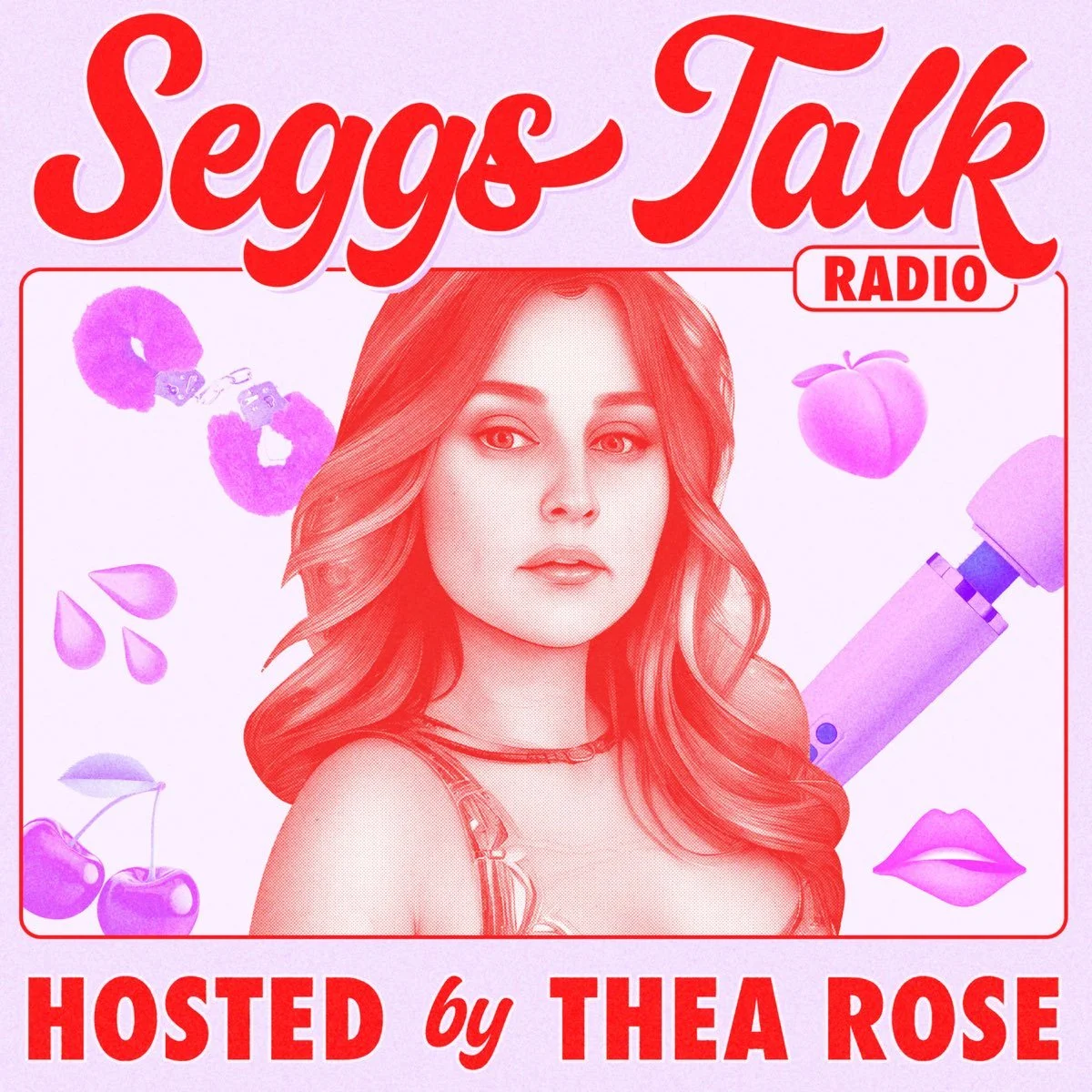
I recently sat down with Thea Rose, host of Seggs Talk Radio, to talk about the Gilgo Beach murders, also known as the Long Island Serial Killer (LISK) case, and the role stigma has played in shaping how this story has been understood.
For those unfamiliar, the case began to take shape in December 2010, when a police canine unit discovered human remains wrapped in burlap along Ocean Parkway on the south shore of Long Island. Within days, three more bodies were found nearby. The women were later identified as Maureen Brainard-Barnes, Melissa Barthelemy, Megan Waterman, and Amber Lynn Costello, now known as the “Gilgo Four.” All were in their twenties. All had engaged in sex work. Their discovery revealed a pattern that had gone unrecognized for years.
For more than a decade, the case remained one of the country’s most persistent unsolved investigations. In 2023, advances in DNA evidence led to the arrest of Rex Heuermann, shifting the case toward resolution. But the circumstances that allowed it to unfold the way it did still warrant close attention.
From the outset, the investigation was shaped by a combination of fragmented jurisdiction and bias. When Maureen Brainard-Barnes disappeared in 2007, agencies in different states struggled to coordinate. Her case was treated as a voluntary disappearance rather than a potential crime, and it remained inactive for years.
Melissa Barthelemy’s disappearance in 2009 raised immediate concerns for her family, particularly after a series of disturbing calls were made from her phone to her teenage sister. Even so, her case moved unevenly across departments. In 2010, when Megan Waterman and Amber Lynn Costello went missing, similar patterns emerged. In each instance, attention was filtered through assumptions about their lives rather than the urgency of their absence.
The classification of these women as “high-risk” had real consequences. Cases were handled individually rather than collectively. Opportunities to identify a pattern were missed. What might have been recognized earlier as the work of a serial predator took years to come into focus.
Public understanding followed a similar trajectory. Early coverage often reduced the women to a category, emphasizing occupation over identity. That framing shaped how the story was received and how much empathy it generated. It was only through sustained advocacy by family members that the narrative began to shift toward who these women were as people.
I came into this case while researching and writing what would become LISK: Long Island Serial Killer in 2016. At that point, the investigation had slowed considerably. That distance made it possible to look more closely at the structural failures surrounding it. What became clear over time is that stigma does not operate in isolation. It informs perception, and perception drives action.
Working on this case changed the direction of my career. It led to the founding of Moonpie Media, a podcast production company grounded in human-centered storytelling. The work is rooted in a simple principle: start with the person, not the circumstance. Ask what has been overlooked. Stay with the complexity.
The women connected to this case have stayed with me, as have their families, many of whom have spent years pressing for answers and accountability.
On Seggs Talk Radio, Thea and I talked about the importance of approaching stories like this with care and precision. For me, that continues to mean a commitment to victim-centered storytelling and to examining how narratives are constructed in the first place.
I’m grateful to Thea for creating space for a conversation that felt thoughtful and grounded. These are difficult subjects, but they deserve sustained attention.
You can listen to the episode of Seggs Talk Radio on all major podcast platforms.